 Skip to content
Tihar Festival
Tihar – The Festival of Lights in Nepal
Tihar is one of the most beautiful and widely celebrated festivals in Nepal. Known as the Festival of Lights, Tihar is a five-day celebration that honors animals, celebrates the bond between brothers and sisters, and worships Goddess Laxmi, the goddess of wealth and prosperity. The festival fills homes, streets, and cities like Pokhara with light, color, music, and joy.
Tihar usually falls in October or November, shortly after Dashain, and is celebrated by people of all ages with great enthusiasm.
The Five Days of Tihar
Each day of Tihar has its own special meaning and rituals:
🐦 Kaag Tihar (Crow Day)
The first day is dedicated to crows, which are believed to be messengers. People offer food to crows to bring good fortune and avoid misfortune.
🐕 Kukur Tihar (Dog Day)
On the second day, dogs are honored for their loyalty and protection. They are decorated with flower garlands (mala), tika on their foreheads, and given delicious food.
🐄 Gai Tihar & Laxmi Puja (Cow and Goddess Laxmi Day)
The third day is dedicated to cows, which are considered sacred in Hindu culture. In the evening, people worship Goddess Laxmi. Homes are cleaned and beautifully decorated with oil lamps (diyo), candles, and colorful rangoli designs to welcome prosperity and good luck.
🐂 Govardhan Puja / Mha Puja
The fourth day varies by community. Some worship oxen and the Govardhan hill, while the Newar community performs Mha Puja, a ritual for self-purification and self-respect.
👩👦 Bhai Tika (Brother-Sister Day)
The fifth and final day is Bhai Tika, one of the most important days of Tihar.
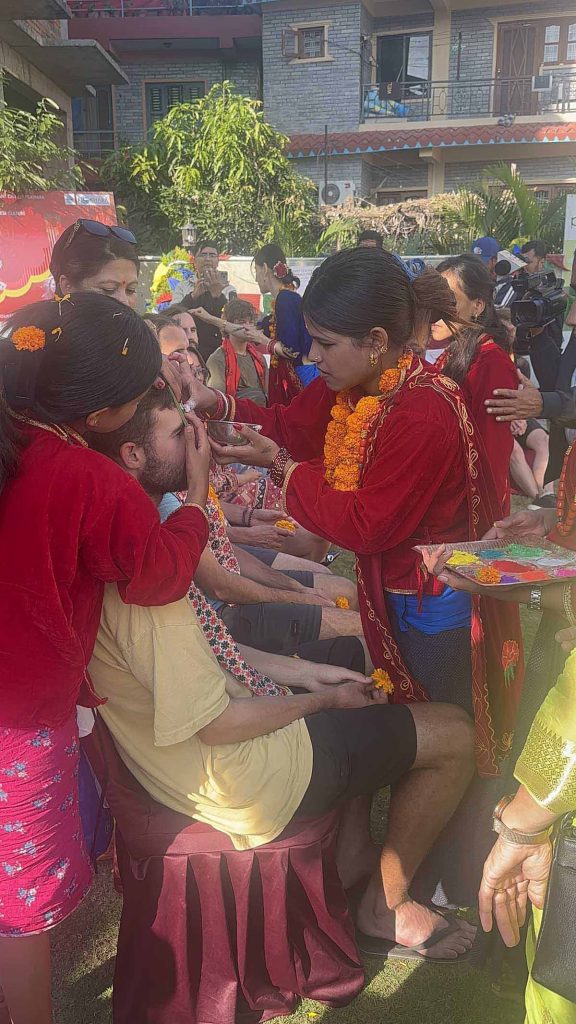
Bhai Tika – Celebrating the Bond of Siblings
Bhai Tika celebrates the loving relationship between brothers and sisters. On this day, sisters perform a special ritual for their brothers’ long life, happiness, and success.
During the ceremony:
Sisters apply a colorful seven-colored tika on their brothers’ foreheads.
They place flower garlands around their brothers’ necks.
They offer sweets, fruits, and special dishes.
Brothers, in return, give gifts and promise protection and support.
The tika symbolizes protection, love, and blessings. Families gather together, share meals, laugh, and strengthen their bond.
Lights, Songs, and Celebration
Throughout Tihar, houses glow with oil lamps and decorative lights. Children and youth go from house to house singing traditional songs such as Deusi and Bhailo, receiving blessings and small gifts in return. The atmosphere is joyful, musical, and full of positive energy.
Cultural and Social Importance
Tihar is more than a religious festival—it is a celebration of harmony between humans, animals, nature, and family. It teaches respect, gratitude, and the importance of relationships.
The festival brings communities together, spreads happiness, and fills the air with hope and light.
May the festival of Tihar bring brightness, prosperity, and joy to every home.